
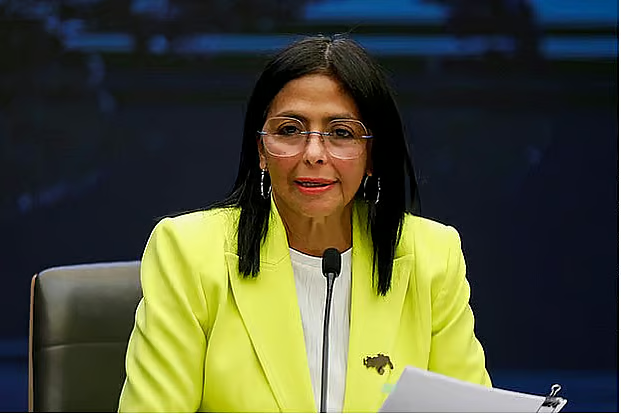
U.S. intelligence reports have cast doubt on whether Venezuela's interim president, Delcy Rodriguez, will fully cooperate with the Trump administration by cutting ties with U.S. adversaries, according to four sources familiar with the latest intelligence.
US officials have said publicly that they want the interim president to cut ties with close allies like Iran, China and Russia and expel their diplomats and advisers from Venezuela.
Representatives from those countries were present at Rodriguez's swearing-in ceremony earlier this month. Delcy Rodriguez has not yet made any official announcement of their breakup.
Delcy Rodriguez took over as president of Venezuela on January 3 after former Venezuelan President Nicolas Maduro was captured by the United States.
The sources, speaking on condition of anonymity, said the US intelligence report indicated that it was unclear whether Delcy Rodriguez fully agreed with the US strategy on Venezuela.
CIA Director John Ratcliffe visited Caracas on January 15 to discuss the country's political future with Rodriguez. However, Reuters could not confirm whether the discussions had changed the intelligence agencies' negative attitude.
Washington wants to reduce the influence of its enemies in the Western Hemisphere. The Trump administration is particularly interested in exploiting Venezuela's vast oil resources. If Rodriguez breaks with US rivals, it would create a major opportunity for US investment in Venezuela's energy sector.
However, failure to control Rodriguez could undermine Washington's influence in Venezuela and its plans to avoid direct military intervention.
There was no immediate comment from the CIA or the Venezuelan government, but a senior Trump administration official said President Trump was maintaining "maximum pressure" on Venezuelan leaders and expected their continued cooperation.
Will Rodriguez abandon old allies?
Earlier, the CIA assessment noted that Maduro loyalists like Rodriguez were best suited to run the Venezuelan government after Maduro.
But critics of Trump's Venezuela policy have questioned the inclusion of people close to Maduro in the interim government from the beginning. According to two sources, Rodriguez's reliability was questioned even before the US military operation.
Iran has helped repair Venezuela's oil refineries, China has taken oil in exchange for loans, and Russia has supplied the Venezuelan military with weapons, including missiles. Venezuela also has long-standing relations with Cuba, but the Trump administration has called for the severance of ties with these countries.
Since ousting Maduro, Rodriguez has taken steps to curry favor with Washington. He has released political prisoners and approved the sale of 30 to 50 million barrels of oil to the United States.
But in a speech on Sunday, Rodriguez said he was "disgusted" by the US intervention. However, US officials claim they have had positive discussions with Rodriguez in recent days.
According to sources, since the Trump administration has strongly supported Rodriguez publicly, Washington is also in contact with senior military and security officials as an alternative.
Is Maria Corina Machado a long-term option?
The intelligence report also states that opposition leader Maria Corina Machado is currently unable to successfully govern the country because she does not have strong connections to the country's security forces or oil sector.
Supporters of Machado claimed that his candidate had won by a large margin in the 2024 election. However, the electoral commission declared Maduro the winner.
Last week, Trump told reporters he wanted to see Machado "integrated" into the leadership. Machado is popular in the White House and is considered a long-term option for Venezuela's leadership. He could be considered for an advisory role for now. But a final decision has not been made.
.png)
0 Comments