
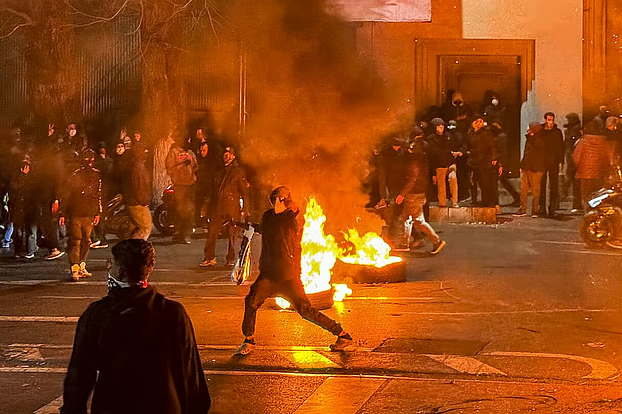
"People helped us, put us in cars... I was just saying, don't take us to the hospital," said Tara (pseudonym), a protester who took part in the protests in Iran.
Tara (pseudonym) and her friend were participating in a protest in the Iranian city of Isfahan when security forces on motorcycles arrived and began shouting at the protesters.
They said, 'My friend told an armed member of the security forces, "Don't shoot us." But then the member fired several bullets at us. We fell to the ground. Our clothes were soaked in blood.'
They and their friend were then picked up by a stranger in a car. They said they were afraid to go to the hospital because of the risk of arrest. "All the alleys were filled with security forces," he said. "A couple was standing at the door of their house. We went there and asked them for shelter."
The government has completely cut off internet access amid the spread of anti-government protests in Iran. Most international media outlets have been banned from reporting. As a result, the true number of casualties in the security forces' crackdown has not been confirmed.
They said that they and their friend were at the couple's house that night. In the morning, they were able to contact a doctor they knew. The doctor cleaned the bullet wounds in their legs.
They added that a surgeon later went to their home and was able to remove some small bullet fragments from their bodies. But he warned, "It's not possible to remove them all. They will remain inside your body."
All names in this report have been changed for security reasons.
The government has completely cut off internet access amid the spread of anti-government protests in Iran. Most international media outlets have been banned from reporting. As a result, the true number of casualties in the security forces' crackdown has not been confirmed.
The US-based Human Rights Activist News Agency (HRANA) claims that it has confirmed the deaths of 6,301 people in the protests so far. Of these, 5,925 were protesters, 112 were children and 50 were ordinary pedestrians. In addition, 214 members of the security forces have been reported killed. The organization is investigating reports of more than 17,000 deaths.
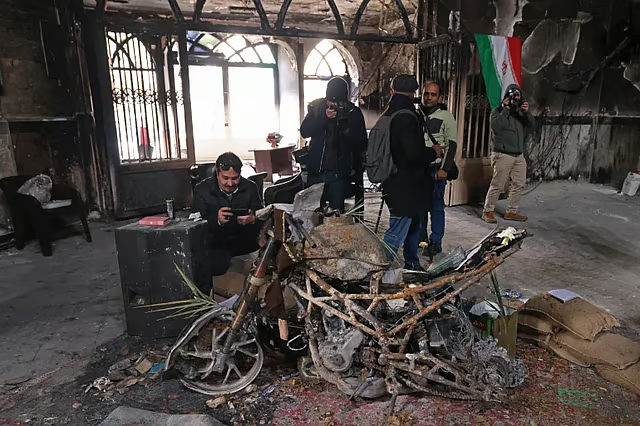
However, the Iranian government has confirmed that more than 3,000 people have been killed.
According to HRANA, at least 11,000 protesters were seriously injured in the movement.
Some of the injured told the BBC that they were not going to hospital for treatment for fear of being arrested, and were instead relying on doctors, nurses and volunteers who were secretly going door-to-door to provide treatment, despite the risks.
Health workers also told the BBC that there was a heavy security presence at hospitals, and that they were constantly checking patient records to identify injured protesters.
Nima (pseudonym), a surgeon in Tehran, said she saw many young people lying in blood on the road as she went to work on January 8. Security forces took a violent stance to suppress protests that day.
Nima told the BBC that she hid one person in the trunk of her car to the hospital for fear of being searched by the police. She added: "We performed continuous surgeries for almost 96 hours without sleeping or even closing our eyes for a moment. But no one complained."
Nima added, "All our clothes and hospital gowns were soaked in blood."
The surgeon said that many of the young people treated at his hospital had deep gunshot wounds to vital organs and limbs. Many of the injuries were so severe that they eventually had to have their limbs amputated, leaving them permanently disabled.
However, Iranian authorities have denied the allegations of repression. Health Ministry spokesman Hossein Shoukry claimed that people trust government hospitals and thousands are receiving treatment. The official death toll is around 3,100, the majority of whom are members of the security forces.
Hossain Shoukri added, "Fortunately, people have confidence in the Ministry of Health and hospitals. Nearly 3,000 people have come to the hospital for treatment in the last six days out of confidence that the injured are receiving impartial service at the medical centers. They were previously treating themselves at home."
Dr. Qasem Fakhrai, chief physician at Tehran's Farabi Eye Hospital, told the semi-official ISNA news agency that as of January 10, they had treated a total of 700 patients with serious eye injuries who needed emergency surgery. In addition, about 200 patients had been referred to other hospitals. He said almost all of these patients had been admitted to the hospital after January 8.
However, Iranian authorities have denied the allegations of a crackdown. While the official death toll is 3,100, they claim that the majority of those killed were members of the security forces.
A health worker in Tehran said doctors are trying not to mention injuries in patients' medical records because security forces are constantly monitoring these documents.
Sina (pseudonym), who went to hospital with her brother after he was shot in the leg during the protests, told the BBC: "The hospital looked like a war zone. There were so many wounded people there that there were no blankets or medical equipment left to give to the patients."
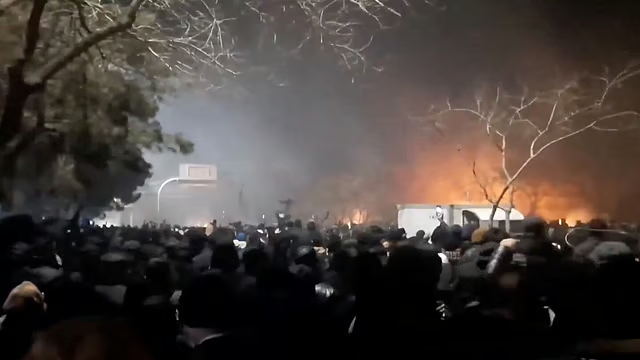
Sina said they were forced to give their real ID numbers to benefit from health insurance. Sina, who is extremely scared about this, said, "Security forces could raid our house at any moment."
The situation is believed to be more dire in small towns than in large cities.
According to reports reaching the BBC, security forces are removing patients from the hospital, after which they have not been seen again.
Human rights groups say security forces are now targeting doctors and health workers treating injured protesters. The Norway-based Iran Human Rights reported last week that at least five doctors and a volunteer health worker had been arrested.
The organization warned, "Security agencies are arresting doctors and raiding makeshift medical facilities primarily to terrorize the general public and disrupt treatment for the injured."
This week, sources close to Dr. Alireza Golchini, a surgeon in the northern city of Qazvin, said security forces stormed his home and beat him severely for treating injured protesters. He has been charged with "declaring war against God," a crime punishable by death under Iranian law.
.png)
0 Comments